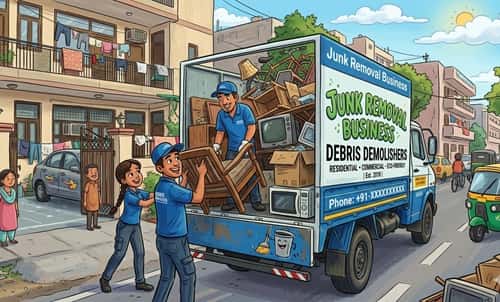
Yes, the junk removal business in India can be profitable. But it’s not a glamorous business. It’s a service-based model where income depends on how many pickups you handle and how efficiently you manage labor and transport. Many people ignore this space, but that’s exactly why it has opportunity.
With rapid urbanization, people are constantly moving, renovating, and upgrading homes. All of this creates waste—old furniture, appliances, construction debris. Someone has to remove it. That’s where this business fits in.
Why Demand is Growing
The reason is simple—waste is increasing.
Demand comes from:
- House shifting and relocation
- Renovation and construction
- Office cleanouts
- Old furniture and appliance disposal
Cities are expanding fast. Apartments are getting renovated, offices are upgrading, and people are replacing old items more often. This keeps demand steady.
Types of Junk Removal Businesses
Your earnings depend on how you operate.
1. Local Pickup Service
- Small team
- Serve nearby areas
- Low investment
2. On-Demand Junk Removal
- Customers book via phone or app
- Charge per pickup
- Flexible pricing
3. Scrap Collection + Resale
- Collect junk and sell recyclable items
- Extra income source
4. Construction Waste Removal
- Handle heavy debris
- Higher charges
- Requires equipment
Many profitable businesses combine removal + recycling.
Profit Margins in Junk Removal Business
Margins can be decent if operations are efficient.
- Service margin: 20% to 40%
- With recycling resale: 30% to 50%
Example:
- Charge per pickup: ₹1,000 to ₹5,000
- Daily 3–5 pickups
Daily revenue = ₹3,000 to ₹15,000
Profit depends on fuel, labor, and disposal costs.
Initial Investment Required
You don’t need a huge setup to start.
1. Small Setup
- ₹1 lakh to ₹3 lakh
- Second-hand vehicle, basic tools
2. Medium Setup
- ₹3 lakh to ₹10 lakh
- Pickup truck, staff
3. Large Operation
- ₹10 lakh to ₹30 lakh+
- Multiple vehicles, team, equipment
Main costs include:
- Vehicle (tempo or pickup)
- Labor
- Fuel
- Basic tools
Monthly Expenses You Should Consider
Expenses are ongoing and important.
- Fuel (major cost)
- Staff salaries
- Vehicle maintenance
- Disposal fees
- Marketing
If not managed well, these can reduce profit.
What Makes This Business Profitable
1. Efficient Operations
Time = money here.
- More pickups per day
- Faster service
2. Smart Pricing
Charge based on:
- Volume
- Type of junk
- Distance
3. Recycling Income
This is a hidden profit.
- Scrap metal
- Plastic
- Electronics
Selling scrap adds extra income.
4. Local Network
Tie-ups bring steady work.
- Builders
- Real estate agents
- Offices
5. Customer Convenience
Easy booking = more customers.
- Phone call
- Online listing
How Much Can You Earn?
Example:
If you do:
- 4 pickups/day
- ₹2,000 per pickup
Daily revenue = ₹8,000
Monthly revenue ≈ ₹2.4 lakh
After expenses:
- Profit can be ₹80,000 to ₹1.2 lakh
With scaling:
- Income can increase significantly
Challenges You Should Know
1. Labor-Intensive Work
Requires physical effort.
2. Fuel Cost
Directly affects profit.
3. Competition from Local Scrap Dealers
Unorganized sector is strong.
4. Disposal Issues
You need proper dumping or recycling channels.
5. Inconsistent Demand Initially
Takes time to build regular customers.
Is It Better Than Other Businesses?
Compared to businesses like gym or furniture, junk removal is simpler but more operational.
Like the gym business, consistent customers and repeat clients help stabilize income .
And similar to the furniture business, efficiency and value extraction (like recycling) increase profitability .
Advantages
- Low to moderate investment
- Growing demand
- Daily income possible
- Scalable
Disadvantages
- Labor-intensive
- Operational challenges
- Fuel dependency
Practical Tips to Increase Profit
- Start with one vehicle
- Focus on fast service
- Build local partnerships
- Sell recyclable waste
- Use WhatsApp for bookings
- Maintain transparent pricing
- Expand area gradually
Final Perspective
The junk removal business in India is not flashy, but it solves a real problem. And businesses that solve real problems tend to survive.
At first, it may feel like hard work with average returns. But once you build a steady flow of customers and understand the system, income becomes more stable.
The real money comes from volume and smart handling of waste—not just removal, but also resale.
If you’re willing to handle operations and stay consistent, this business can turn into a strong, long-term income source.