In today’s competitive business environment, efficiency often decides survival. Whether it is a manufacturing unit, a construction firm, a hospital, a small workshop, or a service-based business, the right equipment or machinery can dramatically improve productivity, quality, and profitability. Machines help businesses do more in less time, reduce manual errors, and scale operations without proportionally increasing manpower.
The problem is cost. Modern machinery and equipment are expensive, and paying the full amount upfront can put serious pressure on cash flow. This is where an equipment or machinery loan becomes useful. It allows businesses to acquire essential assets immediately while spreading the cost over several years.
This article explains what an equipment or machinery loan is, its key features, benefits, and limitations.
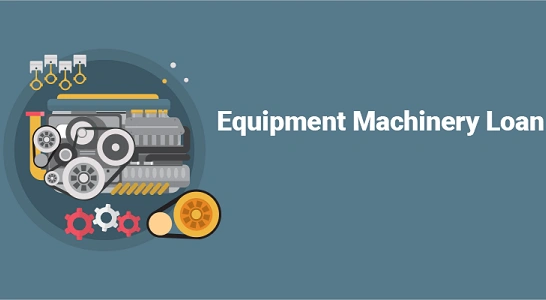
What Is an Equipment / Machinery Loan?
An equipment or machinery loan is a type of business loan offered by banks, NBFCs, and financial institutions to help businesses purchase new or used machinery and equipment. These loans are meant strictly for business or professional use.
The machinery or equipment purchased usually acts as collateral for the loan. Repayment is done through fixed EMIs over a medium to long tenure, generally ranging from 3 to 10 years, depending on the asset type and lender policy.
Such loans are commonly used by manufacturing units, factories, hospitals, transport companies, contractors, workshops, and service providers.
Key Features of Equipment / Machinery Loan
1. Asset-Based Financing
The loan is typically secured by the machinery or equipment being purchased. This reduces lender risk and helps keep interest rates reasonable.
2. High Financing Percentage
Lenders often finance a large portion of the equipment cost, usually between 70% and 90% of the invoice value, depending on the borrower’s profile and asset type.
3. Flexible Repayment Tenure
Repayment tenures generally range from 36 months to 120 months. Longer tenures help keep EMIs affordable and aligned with business cash flow.
4. Fixed or Floating Interest Rates
Borrowers may choose between fixed interest rates with predictable EMIs or floating rates that may change with market conditions.
5. New and Used Equipment Financing
Loans are available for new machinery as well as pre-owned equipment, although used equipment loans may have higher interest rates and shorter tenures.
6. Simple EMI Structure
Repayment is usually done through monthly EMIs, making it easier to plan expenses and manage finances.
Benefits of Taking an Equipment / Machinery Loan
1. Preserves Working Capital
Instead of blocking a large amount of cash in one purchase, businesses can preserve working capital for daily operations such as salaries, inventory, and overheads.
2. Immediate Access to Technology
An equipment loan allows businesses to upgrade or acquire modern machinery immediately, helping them stay competitive and efficient.
3. Improves Productivity and Output
Better machines increase speed, accuracy, and consistency. This often leads to higher production capacity and improved product or service quality.
4. Supports Business Expansion
Equipment loans enable businesses to expand capacity, add new product lines, or enter new markets without waiting years to accumulate capital.
5. Tax Benefits on Interest and Depreciation
Interest paid on machinery loans is generally treated as a business expense. Additionally, depreciation on the equipment can reduce taxable income, improving overall tax efficiency.
6. Customised for Business Cash Flow
Loan structures are often designed to match business income patterns, making repayment more manageable.
7. Builds Business Credit Profile
Timely repayment helps build a strong credit history, improving future access to finance at better terms.
Limitations of Equipment / Machinery Loan
1. Long-Term Repayment Commitment
Machinery loans involve multi-year repayment obligations. If business income drops, EMIs can become a financial burden.
2. Risk of Asset Obsolescence
Technology changes fast. In some industries, equipment may become outdated before the loan is fully repaid, reducing its economic value.
3. Collateral Risk
Since the machinery is pledged as security, default can lead to repossession, which may disrupt business operations.
4. Additional Costs Beyond Loan
Maintenance, repairs, insurance, installation, and operating costs must be borne separately and can be significant.
5. Interest Cost Over Time
Even with reasonable interest rates, the total interest paid over long tenures increases the effective cost of the machine.
6. Eligibility and Documentation Requirements
Lenders require financial statements, bank records, GST returns, and business details. New or informal businesses may face challenges.
Who Should Consider an Equipment / Machinery Loan?
An equipment or machinery loan is suitable if:
- The equipment directly improves productivity or revenue
- The business has stable or predictable cash flow
- The asset has a useful life longer than the loan tenure
- The loan EMI fits comfortably within monthly profits
It may not be ideal for businesses with uncertain demand or for equipment that becomes obsolete quickly.
Common Uses of Equipment / Machinery Loans
- Manufacturing and industrial machinery
- Construction equipment
- Medical and diagnostic machines
- Printing and packaging equipment
- Commercial kitchen equipment
- IT hardware and servers
- Transportation and logistics equipment
Choosing the right equipment is as important as choosing the right loan.
Important Points to Consider Before Taking the Loan
- Assess actual equipment need and return on investment
- Match loan tenure with equipment lifespan
- Calculate total cost, not just EMI
- Keep maintenance and operating costs in mind
- Avoid over-borrowing based on eligibility alone
A machine should generate income, not just expenses.
Conclusion
An equipment or machinery loan is a strategic financing option for businesses that want to grow, modernise, or improve efficiency without straining cash flow. It enables immediate access to essential assets, supports expansion, and helps maintain operational momentum.
However, it also brings long-term repayment responsibility, interest costs, and asset risk. Before taking such a loan, businesses must carefully evaluate their cash flow, equipment utility, and future demand.
When chosen wisely and used productively, an equipment or machinery loan can become a growth engine. When taken without planning, it can turn a useful asset into a financial burden. The difference lies in clarity, discipline, and realistic assessment of business needs.