
Imagine a vast market place that, instead of buying food or clothing, people purchase and sell the raw substances that power the entire world. This is what the market for commodities is. It is where investors can trade things such as gold, silver crude oil, even agricultural products such as grains and spice. In India the market plays an important role in the economic system. It lets farmers sell their produce and companies to purchase the ingredients they require to create products. Investors can also get an opportunity to own a piece of these resources without having to store barrels full of oil in their backyard. The transactions are conducted through exchanges such as that of Multi Commodity Exchange (MCX) which is the biggest in the nation, and it’s the National Commodity and Derivatives Exchange (NCDEX) that focuses more on agricultural products.
The Difference Between Hard and Soft Goods
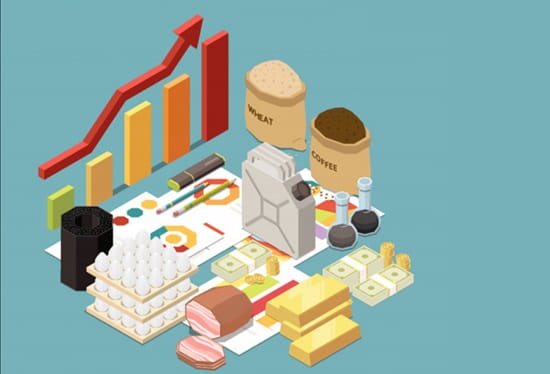
To comprehend how prices change one needs to understand what’s being traded. Commodities are divided into two major families. Hard commodities are those that are extracted from the earth, like silver, gold, or oil. They are in short supply and must be mined or extracted. Soft commodities are the things that grow like coffee, cotton and sugar. They depend on weather. If it’s an adverse monsoon, then the sugar production could fall, making it more costly. This is important since it determines how prices vary each day.
Why Prices Dance to the News
Monitoring the commodity market live is like watching an exercise monitor. The lines are constantly moving upwards and downwards constantly. This is because the prices of commodities are highly sensitive to global developments. When there is a political conflict in a nation that produces oil, then the cost of oil rockets up. When the price of Indian Rupee falls in comparison to the US Dollar, importing gold and silver is more costly which pushes prices up. It’s a daily puzzle where pieces such as the weather, policies of government and international news all go in to calculate the cost.
The Story Behind the White Metal
Silver is a great illustration of how complicated the price fluctuations of silver can be. It is often referred to as “white gold” It is distinctive due to its use in making jewellery, as well as for the heavy industry of solar panels and electronics. If investors are looking at the cost of silver today they’re looking at the price of silver that is affected by two different forces. If the economy is growing factories will purchase more silver to manufacture their goods which pushes the price higher. If the economy is in a slump investors invest in silver as a security net that pushes prices up. Additionally global trends and rates of exchange for the Dollar and Rupee are a major factor in determining the daily rate on exchanges such as the MCX.
Betting on the Future Without Taking Delivery
The majority of people who trade in this market don’t actually require physical goods. Futures contracts are used to trade. It is an agreement to purchase or sell a product at an agreed price on the future date. The traders try to predict if the price will rise or down. If they are concerned that drought is going to ruin the crop, they purchase wheat futures today and hope to sell them at a later time for a better price. It is a matter of keeping an eyes on the market and an grasp of trends across the globe.
A Balancing Act for Investors
It isn’t for those who aren’t confident. Prices can be unstable, swinging around in a matter of minutes. However, it’s an excellent way to diversify your investment portfolio. If the stock market is down commodities such as gold tend to rise, helping to compensate for the losses. It is essential to stay informed of the latest rates and knowing that in this particular market, what happens in a mining facility in Africa or in a agricultural farm located in Brazil directly affects the prices in Mumbai.











Leave a Reply