
Cash flow does not always move in a straight line. Salaries, business income, client payments, or commissions may come late, while expenses continue on time. Rent, EMIs, salaries, utility bills, and vendor payments do not wait. In such situations, people often need short-term access to funds without taking a full-fledged loan. This is where an overdraft loan becomes useful.
An overdraft loan is not meant for big purchases or long-term goals. It is designed to handle temporary cash shortages smoothly. You borrow only when needed, pay interest only on the amount used, and repay whenever cash comes in. Because of this flexibility, overdraft facilities are widely used by businesses, professionals, and even salaried individuals with stable income.
At the same time, overdrafts require discipline. Easy access to money can quietly turn into a habit, leading to higher interest costs if not managed properly. This article explains what an overdraft loan is, its key features, benefits, and limitations.
What Is an Overdraft Loan?
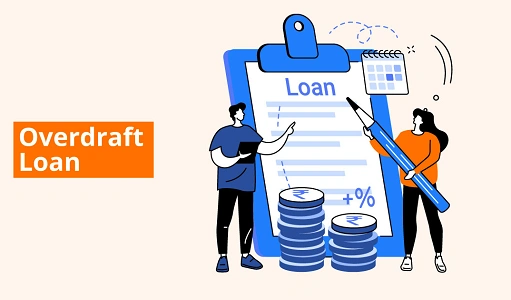
An overdraft loan is a credit facility linked to a bank account that allows you to withdraw more money than the available balance, up to a pre-approved limit. In simple terms, the bank allows your account to go into negative balance within a fixed limit.
Interest is charged only on the amount actually used and for the number of days it remains outstanding. Overdrafts can be secured (against fixed deposits, property, or other assets) or unsecured (based on income, credit profile, or business turnover).
Overdraft facilities are usually renewed annually and are best suited for short-term working capital or temporary cash flow needs.
Key Features of an Overdraft Loan
1. Flexible Borrowing
You can withdraw funds as and when required, up to the sanctioned limit. There is no need to take the entire amount at once.
2. Interest Only on Utilised Amount
Unlike term loans, interest is charged only on the amount used, not on the full sanctioned limit. This makes overdrafts cost-efficient for short-term use.
3. Revolving Credit Facility
As you repay the used amount, the available limit gets restored. You can borrow again without reapplying for a loan.
4. Secured and Unsecured Options
Overdrafts can be offered against collateral such as fixed deposits or property, or without security based on income and creditworthiness.
5. No Fixed EMI Structure
Most overdraft loans do not have fixed EMIs. Repayment is flexible, as long as interest payments are made and the limit is maintained.
6. Short-Term Nature
Overdraft facilities are typically meant for short-term use and are reviewed or renewed periodically by the lender.
Benefits of an Overdraft Loan
1. Excellent for Cash Flow Management
The biggest advantage of an overdraft loan is smooth cash flow management. It helps bridge timing gaps between income and expenses without disrupting operations or personal finances.
2. Pay Interest Only When You Use It
Since interest applies only to the utilised amount, borrowing cost stays low if usage is limited and short-term.
3. High Flexibility
You decide when to borrow and when to repay. There is no fixed schedule like EMIs, which provides breathing room during fluctuating income periods.
4. Ideal for Businesses and Professionals
Businesses use overdrafts to manage working capital, pay suppliers, handle seasonal demand, or meet urgent expenses without taking long-term loans.
5. Quick Access to Funds
Once approved, funds are available instantly through the linked account. There is no need for repeated approvals.
6. Can Be Cost-Effective If Used Wisely
Compared to repeated short-term loans, an overdraft can be cheaper if used occasionally and repaid quickly.
7. Helps Maintain Credit Discipline
When managed properly, overdrafts help maintain financial stability without missed payments or defaults.
Limitations of an Overdraft Loan
1. Higher Interest Rates Than Term Loans
Overdraft interest rates are usually higher than home loans, LAP, or term business loans. Long-term use can become expensive.
2. Easy to Overuse
Because money is readily available, borrowers may develop a habit of continuous usage, leading to persistent interest costs.
3. Not Suitable for Long-Term Needs
Overdrafts are meant for temporary gaps, not for funding large purchases, expansion, or long-term investments.
4. Renewal Risk
Overdraft facilities are reviewed periodically. The bank may reduce the limit or cancel it if income drops or account performance weakens.
5. Collateral Risk (For Secured Overdrafts)
If the overdraft is secured against assets like FD or property, failure to repay may lead to adjustment or legal recovery.
6. Discipline Is Required
Since there is no fixed EMI pressure, repayment depends entirely on self-discipline. Poor control can lead to rising debt.
Who Should Consider an Overdraft Loan?
An overdraft loan is suitable if:
- Income is regular but timing varies
- You need short-term liquidity, not long-term funding
- You can repay quickly once cash comes in
- You want flexibility instead of fixed EMIs
It works especially well for business owners, freelancers, consultants, and salaried individuals with stable income patterns.
Things to Keep in Mind Before Using an Overdraft
- Use overdraft only for short-term needs
- Repay as soon as funds are available
- Avoid continuous rollover of balance
- Track daily interest costs
- Maintain healthy account activity
An overdraft should act as a cushion, not a lifestyle funding tool.
Conclusion
An overdraft loan is one of the most flexible credit facilities available. It helps manage temporary cash shortages smoothly, charges interest only on what you use, and provides instant access to funds when needed. For businesses and individuals with fluctuating cash flows, it can be an excellent financial support system.
However, flexibility comes with responsibility. Overdrafts are not cheap if used continuously, and the absence of fixed EMIs can encourage poor financial discipline. Used wisely, an overdraft loan acts like a safety net. Used casually, it can quietly drain money through interest.
The key is simple: treat an overdraft as a short-term helper, not a permanent source of income.




Leave a Reply