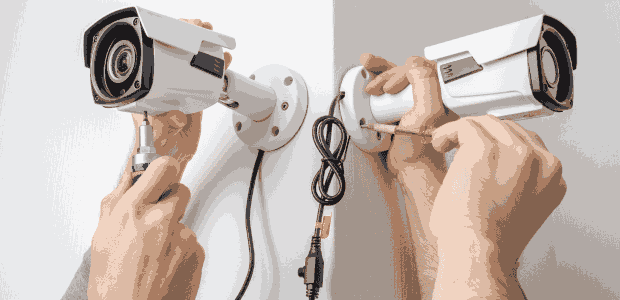
India is watching. From Old Delhi’s crowded lanes to Bengaluru’s tech parks, from small-town jewellery shops to highway toll plazas — cameras are everywhere and more go up every day. Demand for CCTV installation has exploded across every segment of Indian society, driven by rising crime awareness, government mandates, and affordable technology.
What makes this particularly compelling is the recurring maintenance revenue that follows every camera installed. Every system creates a long-term service relationship, a maintenance contract, and an upgrade opportunity — making it one of the most naturally recurring revenue businesses in the service sector.
The Market: Surveillance Is Now Universal
India’s security and surveillance market is valued at over ₹15,000 crore and growing at approximately 20–25% annually — one of the fastest growth rates among all technology service sectors. This growth is coming from every direction simultaneously.
Residential societies, retail stores, banks, hospitals, and offices now treat multi-camera setups as standard practice. Government smart city projects and the Nirbhaya Fund have accelerated public space deployment further.
Falling hardware costs have democratised access — a four-camera system that cost ₹40,000 five years ago now deploys for ₹15,000–20,000. This has massively expanded the addressable market without reducing installation and service revenue.
Investment Required: Low Barrier, High Upside
The CCTV installation business is among the most accessible technology service businesses to start in India. Physical infrastructure is minimal — what matters is technical knowledge, tool kit, and supplier relationships.
A solo or two-person startup can be launched for ₹1–3 lakh, covering a professional tool kit, basic test equipment, a laptop for system configuration, an initial stock of commonly used cameras and accessories, and business registration. A reliable vehicle for site visits is the only other meaningful cost.
A small established operation with 3–5 technicians, a small inventory of systems and spare parts, and a service vehicle requires ₹5–12 lakh to set up comfortably. This scale supports both installation projects and a growing base of Annual Maintenance Contracts.
Revenue and Profit Potential
CCTV businesses generate revenue from two sources: project installation and Annual Maintenance Contracts (AMCs). The combination of these two streams is what makes the business model so attractive.
A basic 4-camera residential install generates ₹8,000–20,000. A 16–32 camera commercial setup runs ₹50,000–3 lakh. Large institutional setups for hospitals or industrial campuses range from ₹3–15 lakh per contract.
A small team completing 15–25 installations monthly generates project revenues of ₹2–6 lakh. After hardware costs at 50–60% of revenue, gross profits reach ₹80,000–2.5 lakh monthly. AMC revenue — typically 8–12% of system cost annually — is where long-term profitability is built. An AMC base of 200 systems averaging ₹8,000 per contract generates ₹16 lakh in annual recurring revenue with minimal incremental cost.
Net profit margins range 25–40%, with AMC revenue commanding the higher end.
What Drives Profitability
AMC Base Building: Every installation is a chance to sign a maintenance contract. Businesses that convert 60–70% of clients into AMC subscribers build a compounding, predictable revenue base that grows with every passing year.
Commercial Focus: Residential installs are high-volume but low-value. Commercial clients — retail chains, hospitals, schools, factories — offer larger project values, multi-location work, and multi-year AMC relationships that dramatically improve economics.
Technical Certifications: Operators certified in IP networking and video analytics command premium pricing and access government and corporate tenders that uncertified competitors cannot.
Builder Partnerships: Being a preferred vendor with real estate developers generates bulk project pipelines with minimal sales effort — a single active developer tie-up can yield 20–50 installations per year.
Challenges to Navigate
Hardware Commoditisation: Clients sometimes buy equipment online and want labour only. Differentiating on system design, quality assurance, and ongoing support protects revenue.
Technician Retention: Trained technicians are in demand and hard to retain. Fair pay and clear career growth reduce attrition.
Cybersecurity: IP-based systems are network-connected and hackable if poorly configured. Proper setup and maintenance practices protect clients and reputation.
The Verdict: Recurring Revenue, Low Overhead, Real Growth
The CCTV installation and maintenance business in India is a genuinely excellent service business. It combines low startup costs, strong installation margins, and a naturally compounding AMC revenue stream into an enterprise that gets more profitable with every passing year.
Frequently Asked Questions (FAQs)
Q1. How much investment is needed to start a CCTV installation business?
A solo or two-person startup needs ₹1–3 lakh for tools, test equipment, initial inventory, and registration. A small team operation with service vehicles and spare parts stock requires ₹5–12 lakh. It is one of the lowest-investment technology service businesses available.
Q2. What licences or certifications are needed?
Trade licence and GST registration are standard. Brand certifications from Hikvision, Dahua, or CP Plus and basic IT networking qualifications improve tender win rates. A Private Security Agency licence may be needed if bundling security guard services.
Q3. How much can the business earn monthly?
A small team doing 15–25 installs earns ₹2–6 lakh in project revenue. An AMC base of 200 systems adds ₹1.3 lakh monthly. Combined, a well-run operation generates ₹3–7 lakh monthly with net margins of 25–40%.
Q4. What is an AMC and why does it matter?
An Annual Maintenance Contract is a yearly agreement — typically 8–12% of system cost — covering maintenance, support, and repairs. Predictable, recurring, and minimal-cost to deliver. It is the most valuable revenue stream and compounds as the installed base grows.
Q5. Is it viable in Tier-2 cities like Bhubaneswar or Lucknow?
Absolutely — Tier-2 cities are arguably the best market right now. Organised CCTV businesses are scarce outside metros yet demand from shops, schools, and hospitals is just as strong. First movers build dominant positions quickly.
Q6. Which client segment is most profitable?
Commercial and institutional — retail chains, hospitals, schools, and factories. A single hospital contract can be worth more than 20 residential installs combined, with a long-term maintenance relationship included.
Every camera installed is a client retained — build the maintenance base, and the CCTV business builds itself.