A few decades ago, software businesses in India mainly focused on IT services, outsourcing, and custom software development for foreign companies. But the internet economy has changed the technology industry completely.
Today, businesses no longer want to install expensive software separately on every computer or maintain large in-house IT systems. Instead, they prefer cloud-based software they can access anytime through a browser or mobile app with monthly or yearly subscriptions.
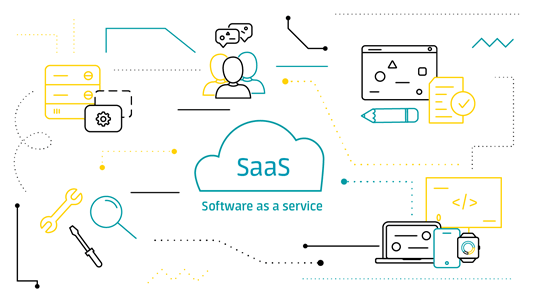
This model is known as Software as a Service — commonly called SaaS.
From accounting tools and CRM platforms to HR software, marketing automation, AI tools, project management systems, e-commerce platforms, cybersecurity dashboards, and education apps, SaaS products are now used by businesses of every size.
At the same time, India has become one of the world’s largest startup ecosystems with millions of businesses gradually digitizing operations. This has transformed SaaS into one of India’s fastest-growing and potentially most profitable modern business models.
Unlike traditional businesses that depend heavily on physical inventory or manufacturing, SaaS businesses are built around software products, subscriptions, scalability, and recurring revenue.
A Business Connected to Digital Transformation
The global shift toward cloud computing and online business operations continues driving SaaS demand rapidly.
Several factors continue supporting industry growth:
- Expansion of startups and SMEs
- Increasing internet and smartphone adoption
- Growth of remote and hybrid work
- Rising digital transformation across industries
- Subscription-based software preference
- AI and automation demand
Businesses today increasingly prefer software solutions that save time, improve efficiency, and reduce operational complexity.
Types of SaaS Businesses
1. CRM and Sales Software
Customer management and sales-tracking tools.
2. HR and Payroll SaaS
Employee attendance, hiring, and payroll-management systems.
3. Accounting and Finance SaaS
Billing, GST, invoicing, and financial-management platforms.
4. Marketing Automation SaaS
Email marketing, analytics, and campaign-management software.
5. AI and Productivity SaaS
Automation tools, chatbots, and workflow systems.
6. Industry-Specific SaaS
Software designed for hospitals, schools, logistics, restaurants, or real estate businesses.
Investment Required: Low to Very High
SaaS businesses can start with relatively low infrastructure investment but require strong technical capability.
A small SaaS startup may require ₹5–25 lakh including:
- Software development
- UI/UX design
- Cloud hosting
- Branding and marketing
- Developer salaries
- Customer support systems
A larger SaaS company with enterprise-grade infrastructure and scaling teams may require ₹1 crore–₹100 crore or more depending on growth stage and funding.
The biggest investment in SaaS is usually talent and product development.
Revenue and Profit Potential
SaaS businesses can become extremely profitable because software products scale without proportional increases in physical costs.
Revenue sources may include:
- Monthly subscription fees
- Annual enterprise contracts
- Freemium-to-premium upgrades
- API and integration services
- White-label software licensing
- Add-on and premium feature sales
For example:
- One software product can serve thousands of customers simultaneously.
- Subscription models create recurring predictable income.
- Enterprise SaaS clients often generate high-value long-term contracts.
Successful SaaS businesses can achieve exceptionally high margins over time. Mature SaaS companies often operate with profit margins between 30–70% depending on customer acquisition costs and operational efficiency.
Scalable recurring revenue is one of the biggest strengths of this business model.
What Makes This Business Successful
1. Solving a Real Problem
The strongest SaaS products simplify important business pain points.
2. Product Simplicity and User Experience
Customers prefer software that feels easy and intuitive.
3. Strong Customer Support
Retention matters heavily in subscription businesses.
4. Continuous Product Improvement
Software products must evolve constantly.
5. Marketing and Customer Acquisition
Even excellent products need strong visibility and positioning.
Challenges to Prepare For
1. Heavy Competition
Global SaaS markets are extremely competitive.
2. Customer Acquisition Cost
Getting paying users can become expensive.
3. Technical Development Complexity
Building stable and scalable software requires skilled teams.
4. Churn and Subscription Cancellations
Retaining users is just as important as acquiring them.
5. Rapid Technology Changes
AI, cybersecurity, and cloud technologies evolve continuously.
SaaS businesses that focus on niche customer problems and long-term product quality usually survive competition much better than trend-driven products.
How to Increase Profitability
1. Focus on Niche Industries
Industry-specific SaaS often faces less competition.
2. Build Subscription-Based Revenue
Recurring monthly income improves long-term stability.
3. Add AI and Automation Features
Modern businesses increasingly prefer automation tools.
4. Expand Globally
SaaS products can serve international customers easily.
5. Create Strong Content and SEO Strategy
Organic traffic reduces long-term customer acquisition costs.
SaaS Business vs IT Services Business
Traditional IT services businesses mainly earn through manpower and client projects. SaaS businesses focus on creating scalable software products sold repeatedly through subscriptions.
This creates much stronger long-term scaling potential.
However, SaaS also involves higher product risk because software must continuously attract and retain users.
The Future of SaaS Business in India
The future looks extremely strong. India’s startup ecosystem, SME digitization, cloud adoption, and AI-driven automation trends continue expanding rapidly.
Indian SaaS companies are also increasingly serving global markets, especially in areas like finance, HR tech, cybersecurity, and productivity software.
At the same time, AI integration and low-code/no-code development tools are creating entirely new opportunities for SaaS innovation.
The Verdict: A High-Scalability Digital Business With Massive Long-Term Potential
SaaS is no longer limited to tech companies building software for large enterprises. It has evolved into one of the world’s most scalable and modern business models connected closely to automation, cloud computing, and digital transformation.
Entrepreneurs who solve genuine business problems, build strong software products, maintain customer retention, and execute effective marketing strategies often create highly profitable recurring-revenue businesses with global reach.
In a country where digital adoption continues accelerating across industries and where Indian startups increasingly compete on the global stage, SaaS is likely to remain one of India’s strongest future-focused business opportunities.
Frequently Asked Questions (FAQs)
Q1. Why are SaaS businesses considered highly profitable?
A: Because software products can scale to thousands of customers without proportionally increasing operational costs.
Q2. Is coding knowledge necessary for starting a SaaS business?
A: Strong technical understanding is very helpful, although some founders build teams or use no-code tools initially.
Q3. What is the biggest challenge in SaaS business?
A: Customer acquisition and long-term retention are among the biggest challenges.
Q4. Can Indian SaaS companies compete globally?
A: Absolutely. Many Indian SaaS startups already serve international customers successfully.
Q5. Why is recurring subscription revenue important in SaaS?
A: It creates predictable long-term cash flow and improves business stability.
Q6. Is SaaS suitable only for large enterprises?
A: No. Many successful SaaS products target small businesses, freelancers, startups, schools, hospitals, and niche industries.