For years, KFC represented something unique in India’s fast-food market — global fast food built around chicken instead of burgers or pizza. Its “Finger Lickin’ Good” identity, crispy fried chicken, and signature spice profile helped it create a category few competitors could challenge at scale.
But by 2026, the game has changed.
India’s Quick Service Restaurant (QSR) market is now one of the most competitive consumer sectors in the country. Global chains, regional startups, cloud kitchens, and aggregator-backed brands are all fighting for the same customer. Consumers want faster delivery, lower prices, healthier options, and localized flavors — all at once.
KFC, primarily operated in India through Devyani International and Sapphire Foods, is responding aggressively. It has crossed 1,100 stores, expanded deeply into Tier-2 and Tier-3 cities, introduced value-focused meals, and even started experimenting with 10-minute delivery models.
At the same time, rising poultry prices and health-conscious consumer trends are creating fresh pressure on the business. In 2026, KFC is not just selling fried chicken anymore — it is fighting to stay culturally relevant in a rapidly evolving food market.
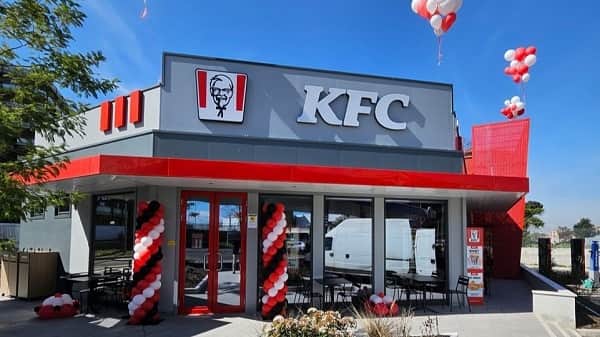
KFC Company Overview
| Parameter | Detail |
| Parent Brand | Yum! Brands |
| Major India Operators | Devyani International & Sapphire Foods |
| Store Count (India) | 1,100+ |
| Core Segment | Fried Chicken & QSR |
| Delivery Contribution | ~38–40% of revenue |
| Strategic Focus | Value Meals & Digital Expansion |
| Key Consumer Segments | Urban Youth & Families |
| Major Trend | Tier-2/Tier-3 penetration |
Strengths
Powerful global brand recognition: KFC’s “Secret Recipe” positioning and long-standing brand identity create a strong flavor moat that competitors still struggle to replicate consistently.
Strong omnichannel presence: The company has built a balanced dine-in, takeaway, and delivery ecosystem, with delivery now contributing nearly 40% of total sales.
Aggressive store expansion strategy: KFC has crossed 1,100 stores in India, with strong penetration into Tier-2 and Tier-3 cities where aspirational global brands continue to attract consumers.
Operational efficiency through smaller formats: The “Smart Kitchens” strategy allows KFC to reduce real-estate costs while maintaining high throughput and profitability.
Localized product innovation: Products like the Biryani Bucket and Veg Zinger have helped the brand adapt successfully to Indian tastes and vegetarian demand.
Weaknesses
Heavy dependence on poultry pricing: Chicken accounts for more than half of KFC’s raw-material costs, making profitability highly sensitive to feed and poultry inflation.
Perception as unhealthy fast food: Despite grilled and plant-based options, KFC still faces a strong “junk food” image among health-conscious consumers.
Operational consistency challenges: Rapid franchise expansion makes it harder to maintain consistent food quality and service standards across all locations.
Limited premium positioning: KFC competes heavily in the value and mass-market segment, limiting pricing flexibility.
High reliance on delivery aggregators: A significant share of orders depends on platforms like Zomato and Swiggy.
Opportunities
Expansion of value-focused meals: Affordable meal boxes and snack combos under ₹149 can attract students and price-sensitive consumers during inflationary periods.
Quick-commerce and 10-minute delivery integration: Partnerships with Blinkit and Zepto are opening new demand channels for instant food delivery.
Growth in plant-based food options: Scaling “KFC Green” and meat-alternative offerings can attract flexitarian and health-conscious customers.
Cloud-kitchen and digital-only brands: Using existing kitchens for specialized digital brands can improve asset utilization and increase revenue per location.
Tier-2 and Tier-3 city growth: Smaller cities remain underpenetrated and continue to offer strong long-term demand growth.
Threats
Rise of local fried-chicken competitors: Regional chains and brands like Popeyes are competing aggressively with localized flavors and pricing strategies.
Increasing health regulations: Potential nutrition labeling rules and taxes on unhealthy food could affect consumer perception and sales.
Weakening discretionary spending: Economic slowdown and rural income pressure could impact fast-food consumption in smaller cities.
Intense delivery competition: Aggregator-backed private labels and cloud kitchens are intensifying competition in the fried-chicken category.
Raw-material inflation: Feed, poultry, and packaging costs continue to pressure margins across the QSR sector.
Verdict
KFC in 2026 remains the dominant fried-chicken brand in India, but the environment around it has become far more complex. The company is no longer competing only with global QSR giants — it is battling regional brands, cloud kitchens, and changing consumer habits.
Its strengths remain significant: brand recognition, operational scale, delivery integration, and localization. Few competitors can match its nationwide presence and supply-chain depth.
But maintaining leadership will require constant adaptation. Consumers are becoming more price-sensitive, health-conscious, and convenience-driven at the same time.
The next phase for KFC will depend on three key priorities. First, how effectively it balances premium branding with affordable value meals. Second, how quickly it adapts to changing health and sustainability expectations. And third, how well it scales digital and quick-commerce channels without damaging margins.
KFC built its success around flavor and familiarity. In 2026, the challenge is staying dominant in a market where convenience, pricing, and local relevance matter just as much.