For years, India’s telecom battle was defined by one thing — price wars. Data became cheaper, tariffs collapsed, and survival depended on scale. In that environment, Bharti Airtel made a different bet.
Instead of chasing only volume, Airtel focused on premium users, enterprise services, and digital infrastructure. That strategy is now reshaping the company.
As of May 2026, Airtel has firmly positioned itself as a “Premium Digital Giant.” It may still trail Reliance Jio in total subscribers, but it leads where profitability matters most — Average Revenue Per User (ARPU), enterprise solutions, and high-value customer engagement.
With ARPU touching ₹259, a 99% active subscriber ratio, and over 181 million 5G users, Airtel is increasingly moving beyond the identity of a traditional telecom company. Data centers, fintech, cybersecurity, and satellite broadband are becoming part of its long-term growth story.
But the transition is expensive. 5G expansion demands massive capital, Jio’s scale advantage remains intimidating, and the industry still lacks a breakthrough use case that fully monetizes 5G.
In 2026, Airtel is no longer just competing for subscribers. It is competing to become India’s leading digital infrastructure company.
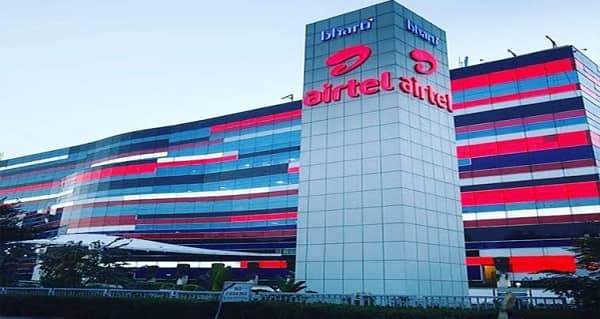
Bharti Airtel Company Overview
| Parameter | Detail |
| Founded | 1995 |
| Headquarters | New Delhi, India |
| Active Subscriber Base | ~474 million |
| ARPU | ₹259 |
| 5G Users | 181+ million |
| M2M Market Share | 62.15% |
| Core Segments | Telecom, Broadband, Enterprise, Fintech |
| Strategic Focus | Transition from “Telco” to “TechCo” |
Strengths
Industry-leading ARPU: Airtel continues to maintain the highest ARPU in the Indian telecom market at ₹259. Its strategy of premiumisation — upgrading users from feature phones to smartphones and prepaid to postpaid — is driving stronger profitability.
Dominant enterprise and M2M position: Airtel is the clear leader in enterprise connectivity, with over 62% market share in Machine-to-Machine (M2M) and IoT connections. This creates a strong moat in the fast-growing B2B segment.
High-quality active subscriber base: While Jio leads in total subscribers, Airtel’s active subscriber ratio (~99.24%) is the highest in the industry, reflecting stronger user engagement and network quality perception.
Diversified digital infrastructure business: Beyond telecom, Airtel is aggressively expanding into data centers through Nxtra Data, fintech services, and cybersecurity solutions.
Strong brand and premium positioning: Airtel has successfully differentiated itself as a quality-focused network rather than a discount-driven operator.
Weaknesses
Heavy capital expenditure burden: The rapid rollout of 5G infrastructure — including over 11,000 new sites added in Q3 FY26 alone — continues to pressure cash flows.
Smaller Fixed Wireless Access (FWA) footprint: Compared to Jio’s aggressive AirFiber expansion, Airtel’s FWA base of around 3 million remains relatively smaller.
Significant debt obligations: Despite improvements in leverage ratios, the company still carries substantial debt related to spectrum payments and AGR liabilities.
Dependence on telecom revenue: Although diversification is growing, mobile and broadband still contribute the majority of revenue.
5G monetization uncertainty: The industry still lacks a strong consumer-driven “killer app” for 5G, making premium pricing difficult.
Opportunities
Expansion into NBFC and financial services: Airtel is building a large-scale fintech and NBFC ecosystem, leveraging its 650+ million global user base for lending, insurance, and digital financial services.
Satellite broadband partnerships: Tie-ups with Eutelsat OneWeb and SpaceX position Airtel strongly in satellite connectivity for rural and remote areas.
AI and cybersecurity monetization: The launch of Airtel’s AI & Cyber Threat Research Center opens up high-margin enterprise security opportunities.
Premium broadband and convergence: Airtel’s home broadband business is adding over 1.2 million customers per quarter, with bundled offerings like Airtel Black improving customer stickiness.
Enterprise digital transformation demand: As Indian businesses digitize, Airtel can expand cloud, connectivity, and cybersecurity services.
Threats
Jio’s scale advantage: Reliance Jio remains the volume leader with enormous pricing power and bundled service capabilities.
Lack of compelling 5G consumer use cases: Without applications that significantly improve user experience, 5G monetization may remain slower than expected.
Regulatory and AGR risks: Spectrum allocation changes and AGR-related disputes continue to create financial uncertainty.
Regional competition: BSNL and Vodafone Idea still hold regional strongholds in certain circles.
Technology disruption and pricing pressure: The telecom industry remains highly competitive, with constant pressure on tariffs and innovation.
Verdict
Airtel in 2026 is evolving into something much bigger than a telecom company. It is building a premium digital ecosystem around connectivity, enterprise solutions, fintech, cybersecurity, and infrastructure.
Its strategy of focusing on quality rather than just subscriber numbers is finally showing results. Industry-leading ARPU, strong enterprise dominance, and high active-user engagement give it structural advantages.
But the challenges remain significant. 5G monetization is still uncertain, capital expenditure remains heavy, and Jio’s scale continues to shape the industry landscape.
The next phase for Airtel will depend on three critical moves. First, how effectively it monetizes 5G and enterprise services. Second, how successfully it expands beyond telecom into fintech and digital infrastructure. And third, how well it manages debt while sustaining growth.
Airtel has already proven it can survive India’s telecom wars. The next challenge is proving it can lead India’s digital future.