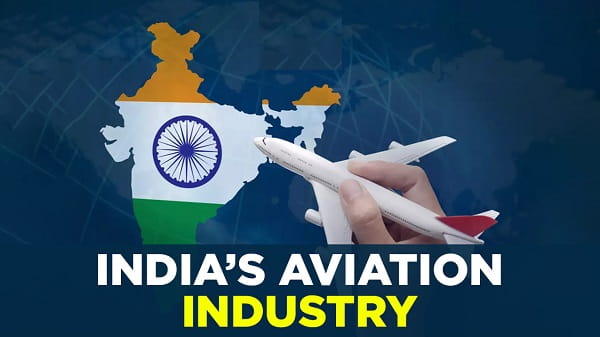
The Indian airline industry in 2026 is entering one of the most important growth phases in its history. What was once considered a premium mode of travel for a small urban population is now rapidly becoming part of mainstream middle-class mobility across India.
Domestic aviation demand continues to surge as rising incomes, affordable smartphones, digital booking platforms, and expanding regional connectivity bring millions of first-time flyers into the market. India remains one of the world’s most underpenetrated aviation economies, with only a small percentage of the population flying regularly.
This creates an enormous long-term opportunity.
At the same time, the structure of the industry is changing dramatically.
The collapse or weakening of smaller airlines has led to the emergence of a powerful duopoly dominated by IndiGo and the Air India Group. Together, these two players now control more than 90% of India’s domestic aviation market, reshaping pricing power, capacity planning, and competition.
The sector is also witnessing unprecedented infrastructure expansion. New mega-airports such as Navi Mumbai and Jewar are expected to redefine aviation geography, while long-haul international routes and next-generation aircraft are opening new global opportunities for Indian carriers.
But despite the growth story, the industry remains financially fragile.
High fuel costs, geopolitical instability, aircraft-delivery delays, pilot shortages, and razor-thin margins continue to challenge profitability. Indian airlines are growing rapidly in scale, but turning that scale into sustainable profitability remains difficult.
In 2026, the Indian airline industry is no longer simply about passenger growth. It is becoming a strategic infrastructure sector connected to tourism, business mobility, logistics, digital commerce, and India’s broader economic expansion.
Indian Airline Industry Overview
| Parameter | Detail |
| Industry Valuation | ~$16.24 billion |
| 2030 Projection | ~$28.26 billion |
| Domestic Passenger Count | 164–170 million |
| Industry Growth Rate | ~11.72% CAGR |
| Major Market Leaders | IndiGo & Air India Group |
| Combined Market Share | ~91.1% |
| Fastest Growing Region | East India |
| Major Upcoming Airports | Navi Mumbai & Jewar |
| Core Industry Model | Low-cost aviation dominance |
Strengths
Massive long-term passenger growth potential: India remains one of the world’s least penetrated major aviation markets, leaving enormous room for future expansion.
Huge aircraft order pipelines: Indian airlines have nearly 1,500 aircraft on order, strengthening long-term fleet modernization and expansion plans.
Stable industry leadership structure: The dominance of IndiGo and Air India has brought more pricing discipline and operational stability.
Strong government policy support: Initiatives like UDAN and domestic MRO development are improving regional connectivity and infrastructure.
Rapid airport infrastructure expansion: New airports and terminal expansions are increasing long-term industry capacity.
Weaknesses
Severe infrastructure bottlenecks at major hubs: Delhi and Mumbai airports continue operating under intense congestion pressure.
Thin profitability margins: Even strong revenue growth often translates into limited profits because of high operating costs.
Financial fragility of smaller airlines: Regional and mid-sized carriers continue to struggle for survival against dominant players.
Dependence on imported aircraft: India remains heavily reliant on Airbus and Boeing for commercial aviation expansion.
Operational complexity during rapid scaling: Managing crew, maintenance, scheduling, and airport congestion remains challenging.
Opportunities
Launch of major new airports: Navi Mumbai and Jewar airports could significantly expand aviation capacity and reduce congestion.
Growth in East India and Northeast regions: Large under-served populations create significant long-term demand potential.
Expansion of international long-haul routes: Indian airlines are increasingly competing directly on premium international routes.
Urban air mobility and eVTOL potential: India could become a major future market for air taxis and short-distance aerial mobility.
Rise of aviation-linked tourism and business travel: Growing middle-class mobility is driving sustained travel demand.
Threats
Geopolitical instability and airspace disruptions: Conflicts in West Asia continue to increase flight times and operational costs.
Extreme volatility in aviation fuel prices: ATF remains one of the industry’s biggest cost risks.
Intense regulatory oversight: Authorities are increasing operational scrutiny following airport congestion incidents.
Pilot and technical-staff shortages: A lack of skilled aviation manpower is increasing salary pressure.
Global supply-chain disruptions: Aircraft-delivery delays continue to affect expansion timelines.
Verdict
The Indian airline industry in 2026 is entering a defining decade. Passenger demand is expanding rapidly, infrastructure investment is accelerating, and aviation is increasingly becoming a central pillar of India’s economic growth story.
The sector’s strengths are substantial — massive untapped demand, strong government support, growing middle-class mobility, and one of the world’s largest aircraft expansion programs. Few global aviation markets possess such long-term growth visibility.
But profitability remains the industry’s biggest challenge. Fuel-price volatility, congestion, operational pressure, and geopolitical risks continue to make aviation one of the most difficult industries financially.
The next stage of growth will depend on three major priorities. First, how successfully India expands airport and aviation infrastructure. Second, whether airlines can improve profitability without damaging affordability. And third, how effectively the industry manages operational discipline during rapid expansion.
Indian aviation once focused mainly on connectivity between metros. In 2026, it is evolving into a nationwide mobility ecosystem that could reshape tourism, commerce, business travel, logistics, and regional economic development for the next generation.