A building’s exterior takes the full force of the climate, and in India that means a great deal. Monsoon rain, intense summer heat, high humidity along the coasts, and airborne dust in many cities all work steadily on a facade. Exterior wall cladding is the layer that stands between these conditions and the structure behind it, so the choice of material decides how a building looks and how well it survives its first decade.
Cladding is often selected on appearance alone, which is a mistake. A finish that photographs well on a bright day may fade, streak, or loosen once the rains arrive. Choosing well means matching the material to the weather it will face.
What Indian Weather Does To A Facade
Building facades in India face constant exposure to harsh weather conditions, including heavy monsoon rains, intense sunlight, coastal humidity, and fluctuating temperatures. These factors can affect both the appearance and long-term performance of exterior surfaces.
Moisture can penetrate porous materials, prolonged UV exposure may cause fading, and salt-laden coastal air can accelerate surface deterioration. At the same time, repeated expansion and contraction caused by temperature changes place stress on joints and fixings. Choosing a facade material that withstands these conditions is key to ensuring lasting durability and minimal maintenance.
Cladding Materials Worth Considering
Several materials perform well in Indian conditions, each with its own balance of durability, cost, and appearance. The sections below outline how the main options behave once the weather sets to work.
Natural Stone
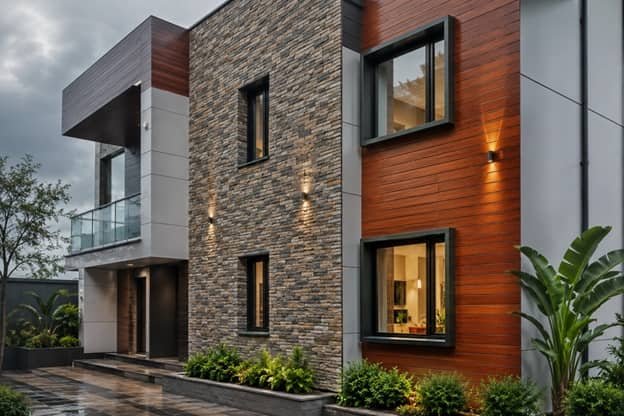
Natural stone remains a trusted choice for Indian facades, supporting a wide range of stone wall design approaches, from dressed ashlar to random rubble. Granite and sandstone in particular resist weathering well and age with a natural patina.
The considerations are weight and fixing. Stone is heavy, so the structure and the anchoring system must be designed for it, and porous varieties may need sealing in wet climates. Installed correctly, stone offers a long service life with minimal fading.
Terracotta And Brick
Terracotta and exposed brick suit the Indian climate and carry a long regional tradition. Fired clay handles heat and sun well and holds its color over decades, which makes it dependable in strong light.
Ventilated terracotta rainscreen systems have grown popular for larger buildings, since they shed water while allowing the wall to breathe. Both materials reward good detailing at joints and copings to keep monsoon water where it belongs.
Fiber Cement And HPL
Fiber cement boards and high-pressure laminate panels offer a lighter, factory-finished alternative. They resist moisture and come in a broad range of colors and textures, which gives designers flexibility without heavy structural loads.
Quality varies with the manufacturer, so UV and weather ratings are worth checking for Indian exposure. Properly specified, these panels deliver a clean, contemporary look with straightforward installation.
Large-Format Engineered Surfaces
Large-format engineered surfaces have entered the cladding market as a dense, non-porous option. Fired under high pressure and heat, they resist moisture, UV fading, and staining, which addresses several Indian weather stresses at once.
Their large format reduces the number of joints across a facade, which helps both appearance and water management. Among engineered surfaces used this way, brands such as Neotra surfaces show how large-format production supports continuous cladding runs. The slabs are available in varied looks and are engineered to resist heat, stains, and frost, making them a practical choice for durable, low-maintenance facade applications.
Design Considerations Beyond The Material
Choosing the right exterior wall cladding material is important, but thoughtful design plays an equally significant role in ensuring long-term performance. Addressing key design elements during the planning stage helps improve durability, minimize maintenance, and protect the building from weather-related damage.
- Water management: Incorporate overhangs, drip edges, and well-designed joints to direct rainwater away from the facade. Effective drainage reduces the risk of moisture penetration and staining.
- Ventilation: In regions with high humidity, a ventilated or rainscreen facade system allows air to circulate behind the cladding, helping moisture escape and improving the lifespan of the wall assembly.
- Color and finish: Select UV-resistant finishes that retain their appearance over time. Lighter shades and high-quality finishes generally perform better under prolonged sun exposure.
- Movement joints: Provide adequate expansion joints to accommodate thermal movement. This helps reduce stress on the facade, preventing cracks, warped panels, and damage to fixings.
Paying attention to these design considerations allows the facade to perform as intended, ensuring it remains durable, functional, and visually appealing through changing seasons.
Installation And Maintenance Realities
Selecting the right facade material is only part of the equation. Proper installation and realistic maintenance planning are equally important to ensure long-term performance, safety, and appearance.
- Quality of installation: Correct anchoring, well-sealed joints, and an appropriate fixing system are essential for a durable facade. Choosing an experienced installer helps prevent future issues.
- Routine maintenance: Different materials require different levels of upkeep. While some may need periodic sealing or repainting, most facades benefit from regular cleaning to remove dust and pollutants.
- Long-term cost: Consider the lifetime cost rather than just the initial material price. Durable, weather-resistant materials often require fewer repairs and less maintenance, offering better value over time.
Taking these factors into account helps ensure your facade remains structurally sound, visually appealing, and cost-effective for years to come.
Conclusion
Exterior wall cladding in India has to stand up to monsoon, sun, salt, and thermal movement, so durability matters as much as appearance. Natural stone offers proven longevity with manageable weight; terracotta and brick offer heat tolerance and lasting color; fiber cement and laminate offer lightweight flexibility; and large-format engineered surfaces offer broad resistance with fewer joints. Choose the material for the climate it will face, detail the design for water and movement, and insist on skilled installation, and the facade will hold up through many seasons of Indian weather.