ATMs are designed to provide reliable access to cash and other banking services, but their performance depends on regular inspection, maintenance, software support, and security controls. A machine that is technically operational but poorly maintained can experience avoidable downtime, transaction failures, security vulnerabilities, or accessibility problems.
For businesses and operators managing automated teller machines, understanding ATM machine service is therefore important for maintaining dependable day-to-day operations. Maintenance is not limited to repairing a machine after it stops working. It can include preventive inspections, software updates, hardware testing, security checks, cleaning, connectivity monitoring, and documentation.
What Does ATM Machine Service Include?
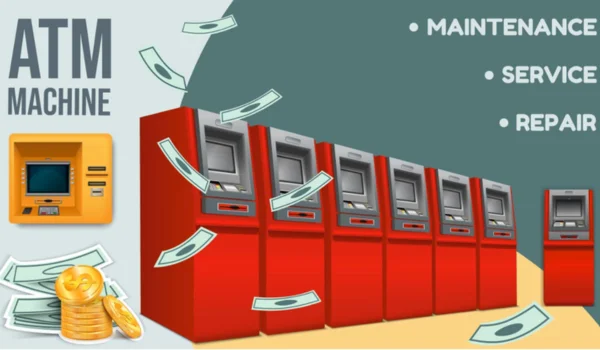
ATM machine service generally refers to the technical and operational work required to keep an ATM functioning safely and reliably. The exact scope varies according to the machine, operator, location, and service arrangement.
Common maintenance activities can include:
- Inspecting card readers and cash-dispensing mechanisms
- Testing the receipt printer
- Checking the keypad and display
- Examining network connectivity
- Reviewing error messages and transaction logs
- Updating supported software and security patches
- Inspecting physical locks and cabinet components
- Checking for signs of tampering
- Testing cash-dispensing functions
- Cleaning appropriate external and internal components
- Replacing worn or faulty parts
- Documenting maintenance and repairs
Regular maintenance can help identify minor problems before they become major failures. It can also provide operators with records that make recurring faults easier to identify.
PCI Security Standards Council ATM guidance recommends reliable logging of maintenance operations and physical access, along with appropriate authentication for service interfaces.
Why Preventive ATM Maintenance Matters
Waiting until an ATM breaks down can result in longer periods of unavailability. Preventive maintenance takes a different approach by identifying potential problems before they affect customers.
For example, a worn card reader may begin producing intermittent transaction failures before completely stopping. Similarly, a printer may show signs of deterioration before receipts can no longer be produced correctly.
Preventive inspections can also identify problems involving cables, power supplies, displays, keypads, cash-dispensing mechanisms, and communication equipment.
For operators, the goal is not necessarily to eliminate every technical failure, which is unrealistic, but to reduce avoidable downtime and shorten the time required to restore service when failures occur.
Security Is a Core Part of ATM Maintenance
A major part of ATM machine service involves security. ATMs handle payment-card information and financial transactions, so maintenance procedures need to consider both physical and digital threats.
The Reserve Bank of India has directed regulated entities to implement ATM security measures including operating-system patching, terminal security solutions, anti-skimming and application whitelisting measures, and supported operating-system versions.
Physical inspections are also important. Technicians should look for unexpected changes to the cabinet, card reader, keypad, locks, cables, and other components. Any suspicious modification should be investigated according to the operator’s security procedures.
PCI ATM security guidance also emphasizes controlling access to sensitive services, protecting remote service interfaces, maintaining security logs, and preventing unauthorized modification of ATM software.
These measures demonstrate why ATM maintenance should be treated as part of an overall security program rather than simply a mechanical repair activity.
Software and Connectivity Need Regular Attention
Modern ATMs depend on software and network connectivity as much as they depend on physical components. A machine may be in excellent mechanical condition but still become unavailable because of a software issue or communication failure.
Operators should monitor supported operating systems, security patches, application updates, network connections, and configuration changes. Unsupported software can create security and operational risks.
RBI directions specifically prohibit regulated entities from using ATMs with unsupported operating systems and require appropriate security measures to strengthen ATM environments.
Connectivity should also be monitored because interruptions can prevent transaction authorization or communication with the relevant processing systems. A maintenance program should therefore include both physical and digital checks.
What About Cash Management?
Cash availability is closely connected with ATM performance. A machine can be technically functional but unable to serve customers if it runs out of cash.
Cash replenishment therefore needs to be coordinated with transaction volumes and local demand. Operators should monitor cash levels and establish procedures for timely replenishment.
In India, RBI-related cash-management guidance has included requirements and standards for service providers involved in ATM cash operations. Government information has also highlighted the importance of trained personnel, secure transportation, and appropriate cash-handling arrangements.
A good maintenance program should distinguish between technical servicing and cash-management responsibilities while ensuring that the two processes work together.
How Accessibility Fits Into ATM Service
Accessibility should also be considered during maintenance. Features intended to help customers with disabilities need to remain functional rather than simply being present when the machine is installed.
Indian banking-sector accessibility guidelines include requirements and recommendations concerning features such as audio support, tactile symbols, Braille markings, button placement, clear floor space, and accessible ATM locations. The guidance also states that self-service machines and talking ATMs should be regularly maintained and monitored.
During maintenance, technicians should therefore check accessibility-related components as well as standard hardware.
Choosing Equipment and Maintenance Together
Businesses researching an ATM machine for sale should consider future servicing requirements before purchasing equipment. The initial purchase price is only one part of the overall cost of operating an ATM.
Important questions include whether replacement parts are readily available, whether technicians are familiar with the equipment, how software updates are handled, and what support is available when a machine develops a fault.
Older or unsupported equipment can become increasingly difficult to maintain. A machine with readily available parts and appropriate technical support may provide better long-term value even when its initial cost is higher.
Maintenance requirements should therefore be considered during equipment selection rather than after installation.
What Should You Expect From an ATM Service Provider?
When selecting an ATM service provider, businesses should examine the scope of support offered rather than relying only on advertised response times.
A useful evaluation can include:
- Preventive maintenance schedules
- Emergency repair procedures
- Technician qualifications
- Geographic service coverage
- Spare-parts availability
- Remote monitoring capabilities
- Security procedures
- Software support
- Maintenance reporting
- Response and resolution targets
- Escalation procedures
Clear documentation is particularly useful for organizations managing multiple machines. Service records can show when a machine was inspected, what problem was identified, which component was replaced, and whether additional action is required.
Conclusion
Reliable ATM operation depends on consistent maintenance rather than occasional repairs. A comprehensive ATM machine service approach should cover hardware inspections, software support, network connectivity, physical security, accessibility, cash-related coordination, and accurate maintenance records. Businesses should also evaluate servicing requirements when purchasing equipment. An ATM machine for sale may appear suitable based on its specifications and price, but long-term reliability depends on whether it can be properly supported and maintained. In the middle of this decision, the role of an ATM machine for sale is important because effective technical support can help identify problems early, respond to failures, and maintain appropriate operational and security controls. By combining suitable equipment with preventive maintenance and clear service procedures, ATM operators can create a more reliable environment for customers and staff.