Planning a kitchen requires more than choosing cabinets and appliances. The right kitchen floor tiles can improve durability, safety, and everyday comfort while enhancing the overall design. From selecting suitable materials to aligning the flooring with daily cooking and cleaning needs, thoughtful planning makes a big difference. With the right approach, you can create a kitchen that feels organised, efficient, and visually appealing while ensuring the flooring performs well in a busy environment. Here are five practical tips to help you choose kitchen flooring that balances style, durability, and everyday functionality.
1. Choose the Right Tile Material for Durability
Choosing the right material is essential for kitchen floors that must handle heat, moisture, spills, and heavy daily use.
- Strong Materials: Select tiles that are durable, moisture-resistant, and easy to maintain for long-term performance.
- Porcelain & Vitrified Tiles: These offer low water absorption and high durability, making them ideal for busy Indian kitchens.
- Ceramic Tiles: Suitable for lighter-use areas, though they may not match the resilience of vitrified options.
- Style Options: Marble-look tiles add elegance, while wood-finish tiles bring warmth without moisture concerns.
Balancing aesthetics with practicality ensures your floor tile design performs well for years.
2. Prioritise Anti-Slip and Safety Features
Prioritising safety helps create a kitchen that is comfortable and secure for everyday use.
- Anti-Slip Surface: Choose tiles with slip-resistant properties to reduce the risk of accidents caused by spills.
- Matte Finishes: Matte or textured tiles provide better grip than glossy surfaces in wet areas.
- Family Safety: Slip-resistant flooring is especially useful in homes with children or elderly members.
- Extra Protection: Rugs or anti-slip mats near sinks and cooking zones can add another layer of safety.
A safe floor tile design supports both functionality and peace of mind.
3. Plan Tile Size and Layout Strategically
Choosing the right tile size and layout helps balance visual appeal with practical functionality in your kitchen.
- Large Format Tiles: Fewer grout lines make cleaning easier and create a seamless, spacious look.
- Smaller Tiles: Ideal for compact kitchens or intricate patterns that add character.
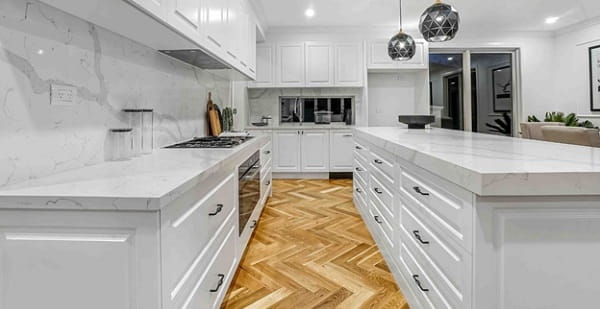
- Creative Layouts: Styles like herringbone or geometric patterns add visual interest without overpowering the space.
- Smart Planning: Start from a focal point and try a dry layout before installation to ensure symmetry and minimise awkward cuts.
Thoughtful planning results in a cohesive and well-finished kitchen floor tiles design.
4. Align Flooring with Kitchen Platform Design
Coordinating the kitchen tiles with the flooring helps create a balanced and visually cohesive space.
- Balanced Contrast: Pair bold or textured flooring with simple, neutral countertops to avoid visual clutter.
- Design Harmony: If the flooring is minimal, explore expressive countertop materials to add character.
- Material Compatibility: Choose platform surfaces that resist heat, stains, and moisture for long-term performance.
- Cohesive Planning: Align flooring and platform design to ensure both style and functionality work together.
Thoughtful coordination results in a kitchen that feels organised, practical, and visually unified.
5. Focus on Maintenance and Longevity
Prioritising maintenance and durability helps keep your kitchen flooring looking fresh, hygienic, and functional for years while reducing long-term repair costs. Choosing the right materials and care routine ensures your flooring performs well even in busy cooking environments.
- Easy-Clean Surfaces: Choose stain-resistant tiles that simplify everyday cleaning and prevent oil, food, and moisture from leaving lasting marks. Low-porosity surfaces make regular upkeep quicker and more efficient.
- Practical Finishes: Matte or glazed tiles hide smudges, watermarks, and footprints better than glossy surfaces, helping your kitchen look neat even with frequent use.
- Grout Protection: Use high-quality grout and proper sealing to prevent dirt, grease, and moisture build-up between tiles, which helps maintain hygiene and appearance.
- Regular Care: Clean with pH-neutral solutions and reseal grout lines periodically to extend the life of your flooring and preserve its finish.
Long-Term Value: Investing in durable tiles reduces maintenance effort, minimises replacement costs, and keeps your kitchen looking modern over time.
Solutions from brands like Simpolo Tiles & Bathware support long-lasting performance with surfaces designed for durability, easy maintenance, and everyday practicality.
Conclusion
A thoughtfully planned kitchen blends practicality with visual appeal. From choosing durable materials and prioritising safety to planning layouts carefully, each decision shapes how the space looks and performs. By applying these five practical tips, you can create a kitchen that supports daily cooking needs while reflecting your personal style. The right floor tiles design, combined with well-planned platform coordination, can turn your kitchen into a space that feels organised, efficient, safe, and visually balanced for everyday use.