Every home, office, shopping mall, hotel, hospital, airport, and commercial building in India depends heavily on one thing that people walk on every single day — tiles. What was once viewed simply as a flooring material has now become a major part of interior design, architecture, and lifestyle spending.
A few decades ago, many Indian homes still used basic cement floors or simple stone finishes. Today, consumer expectations have changed completely. Homeowners now want glossy finishes, designer patterns, anti-skid surfaces, marble-look tiles, wooden textures, premium bathroom designs, and luxury interiors that match modern lifestyle standards.
At the same time, India’s housing boom, urbanisation, smart-city projects, hotel construction, and commercial infrastructure growth continue creating massive demand for flooring and wall solutions across the country.
This has transformed tile manufacturing into one of India’s strongest long-term construction-material businesses.
Unlike trend-based industries that rise and fall quickly, tile demand is closely connected to construction activity — one of the most stable and continuously growing sectors in India.
A Business Connected to Real Estate and Interior Design
India’s construction and renovation industries continue expanding rapidly.
Several factors continue driving tile demand:
- Growth of residential housing
- Expansion of commercial real estate
- Rising interior-design spending
- Increasing renovation culture
- Growth of hotels and malls
- Demand for premium home aesthetics
Consumers today increasingly treat flooring and wall design as important lifestyle decisions rather than basic construction work.
Types of Tile Manufacturing Businesses
1. Ceramic Tile Manufacturing
One of the most common tile categories in India.
2. Vitrified Tile Manufacturing
Premium durable tiles used widely in modern construction.
3. Wall Tile Manufacturing
Decorative bathroom and kitchen wall tiles.
4. Digital and Designer Tile Manufacturing
Luxury printed and textured tiles.
5. Industrial and Outdoor Tiles
Heavy-duty and anti-skid commercial flooring products.
6. Eco-Friendly and Specialized Tiles
Sustainable and premium architectural surface solutions.
Investment Required: High and Infrastructure-Heavy
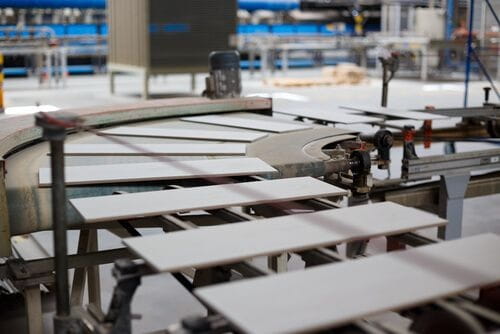
Tile manufacturing requires significant investment in machinery, factory setup, and energy systems.
A small-scale tile manufacturing setup may require ₹50 lakh–₹2 crore including:
- Tile pressing machines
- Kilns and furnaces
- Raw material processing systems
- Factory land and infrastructure
- Power and water systems
- Packaging and transportation setup
A large automated tile manufacturing plant may require ₹10 crore–₹100 crore or more depending on production capacity and technology.
Energy consumption and machinery quality are major operational factors.
Raw Materials Used
Common raw materials include:
- Clay
- Feldspar
- Silica
- Quartz
- Kaolin
- Pigments and glazing chemicals
Raw material quality directly affects tile durability, finish, and appearance.
Revenue and Profit Potential
Tile manufacturing can become highly profitable because demand comes from both new construction and renovation markets.
Revenue sources may include:
- Dealer and distributor supply
- Builder and contractor contracts
- Export sales
- Retail tile showrooms
- Commercial project supply
- Premium designer collections
For example:
- Vitrified and designer tiles usually generate stronger margins.
- Builder partnerships create recurring bulk demand.
- Export-quality products command premium pricing.
A well-managed tile manufacturing business can generate substantial monthly revenue. Net profit margins generally range between 10–25% depending on energy costs, production efficiency, and branding strength.
Businesses with strong dealer networks often scale especially fast.
What Makes This Business Successful
1. Consistent Product Quality
Customers expect durability, accurate sizing, and proper finishing.
2. Attractive Design Range
Modern buyers care heavily about patterns, textures, and aesthetics.
3. Strong Distribution Network
Dealers and construction suppliers are extremely important.
4. Efficient Production Systems
Large projects require bulk delivery within strict timelines.
5. Brand Reputation
Builders and homeowners often prefer trusted tile brands.
Challenges to Prepare For
1. High Initial Investment
Machinery and infrastructure costs are very large.
2. Heavy Competition
Large national and international tile brands compete aggressively.
3. Energy and Fuel Costs
Kilns and production systems consume significant power.
4. Transportation Costs
Tiles are heavy and fragile during shipping.
5. Dealer Margin Pressure
Distribution networks often demand competitive incentives.
Manufacturers who maintain quality consistency and strong dealer relationships usually survive competition much better.
How to Increase Profitability
1. Focus on Premium and Designer Tiles
Luxury products often provide stronger margins.
2. Build Strong Dealer Networks
Local tile dealers heavily influence customer buying decisions.
3. Add Export-Oriented Production
Indian tiles are increasingly supplied internationally.
4. Invest in Digital Printing Technology
Modern designs attract premium customers effectively.
5. Partner With Builders and Architects
Construction projects create stable recurring demand.
Tile Manufacturing vs Marble or Stone Business
Marble and stone businesses depend heavily on natural-material sourcing. Tile manufacturing offers greater design flexibility, mass production capability, and standardized quality.
Tiles are also generally easier to install and maintain for many consumers.
However, manufacturing investment and operational complexity are much higher.
The Future of Tile Manufacturing in India
The future looks extremely strong. India’s housing expansion, renovation culture, smart-city development, and luxury interior-design trends continue growing rapidly.
Consumers are also increasingly replacing older flooring with modern designer tiles during home renovations.
At the same time, digital-printing technology, large-format tiles, and premium architectural surfaces are creating new opportunities in the industry.
The Verdict: A Strong Construction Manufacturing Business With Long-Term Demand
Tile manufacturing is no longer simply about producing flooring materials. It has evolved into a major construction-and-lifestyle industry connected closely to architecture, interior design, real estate, and premium home aesthetics.
Entrepreneurs who maintain product quality, efficient manufacturing systems, strong dealer networks, and attractive design innovation often build highly scalable industrial businesses.
In a country where millions of homes, apartments, hotels, offices, and commercial spaces continue being built and renovated every year, tiles are likely to remain one of India’s most essential and steadily growing construction products for decades ahead.
Frequently Asked Questions (FAQs)
Q1. Which tile category is most profitable in India?
A: Vitrified tiles, designer digital tiles, and premium large-format tiles often provide stronger margins.
Q2. Why is tile demand growing so rapidly today?
A: Because housing construction, renovations, luxury interiors, and modern architecture trends are expanding rapidly across India.
Q3. Is branding important in the tile business?
A: Very important. Builders, architects, and homeowners often prefer trusted brands known for quality and design consistency.
Q4. What is the biggesIs Tile Manufacturing Business Profitable in India?
A: Every home, office, shopping mall, hotel, hospital, airport, and commercial building in India depends heavily on one thing that people walk on every single day — tiles. What was once viewed simply as a flooring material has now become a major part of interior design, architecture, and lifestyle spending.